
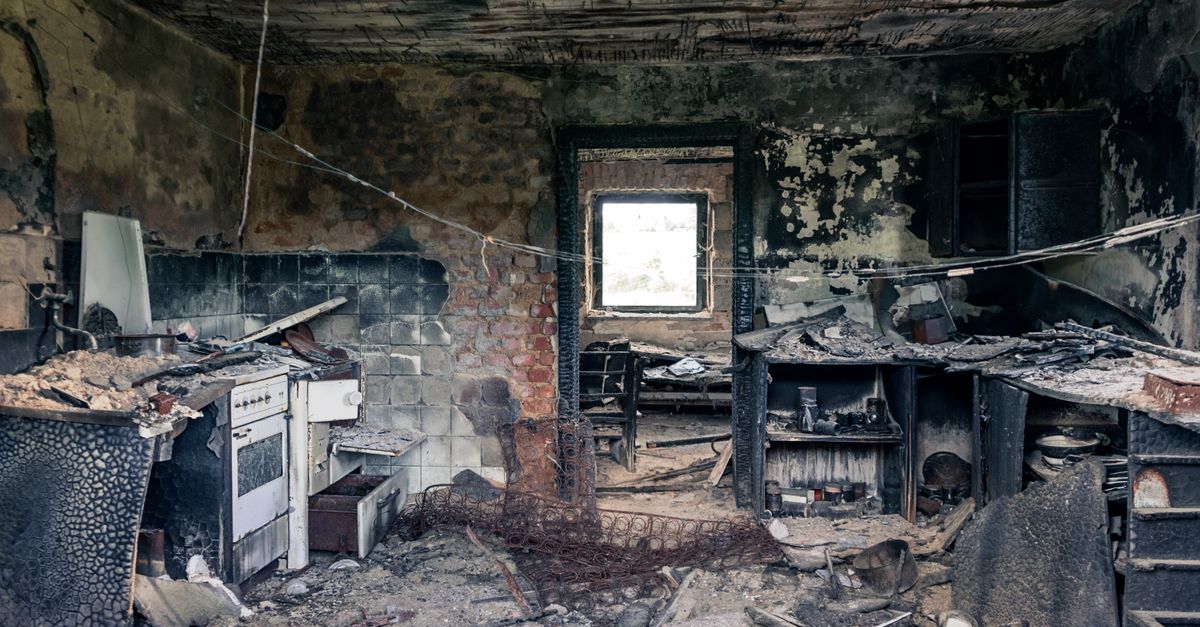
A fire tears through your restaurant kitchen on a Tuesday night. You’re closed for three weeks while contractors rebuild. Your landlord still wants rent. Your trained staff needs paychecks or they’ll find other work. And you’re earning exactly zero dollars. Business interruption insurance—also called business income insurance—exists to cover that gap. But only if the loss meets two specific conditions that most policies don’t explain clearly.
The short answer
Business interruption insurance reimburses lost net income and continuing operating expenses when direct physical damage from a covered peril forces your business to suspend operations. Both parts matter: you need property damage from an insured event (fire, theft, storm) and that damage must be why you can’t operate. Market downturns, supplier problems, or government orders without physical damage typically don’t qualify.
What triggers business interruption coverage
The Insurance Information Institute defines the coverage trigger as a two-part test. Miss either part and the claim fails.
Part one: Direct physical damage
Your business property must suffer actual, verifiable damage from a peril your commercial property policy covers—fire, explosion, windstorm, vandalism, or similar named perils. “Property” includes your building, equipment, inventory, and sometimes outdoor signage or fencing if the policy says so.
Part two: Forced suspension of operations
That damage must make it impossible or unsafe to operate. A cracked window probably won’t qualify; a kitchen rendered unusable by fire will. The suspension has to be caused by the damage, not by something else happening at the same time.
Here’s where businesses trip up: A supplier’s warehouse burns down and you run out of inventory. Your sales drop to zero. That’s not covered under standard business interruption insurance because your property wasn’t damaged. You’d need a separate “contingent business interruption” or “dependent property” endorsement for supplier-related losses, and most small-business policies don’t include it.
Similarly, a pandemic forces your state to order all restaurants closed. No one’s property is damaged; it’s a government mandate. Standard policies exclude this—COVID-19 claims were routinely denied by insurers and upheld in federal court because the policies required direct physical loss to the insured premises.
What business interruption insurance pays for
Once both triggers are met, loss of income coverage kicks in after a waiting period (more on that in a moment). Here’s what standard policies typically cover, based on NAIC policy guidance:
| Covered Expense | What It Includes |
|---|---|
| Lost net income | The profit you would have earned during the shutdown, based on your financial records from the prior 12 months |
| Continuing fixed expenses | Rent, utilities, loan payments—costs that don’t stop even when revenue does |
| Payroll (limited) | Many policies cover 60–90 days of payroll to retain key employees during recovery; longer periods cost extra |
| Temporary relocation | Rent for a pop-up location or mobile operation so you can keep serving customers |
| Extra expenses | Overtime pay, expedited shipping, equipment rental—anything reasonable to speed up reopening |
The insurer calculates “lost net income” by looking at what you earned in the same period last year (or an average if your business is seasonal) and subtracting what you would have spent on variable costs like inventory you didn’t need to buy. You’re made whole on profit and fixed costs, not total revenue.
The waiting period: a cash-flow trap most owners underestimate

Every business interruption policy includes a waiting period—typically 24 to 72 hours—before coverage begins. The idea is to exclude minor, short-term closures (a one-day power outage, a brief equipment failure) and keep premiums lower. But for thin-margin businesses, even 72 hours of zero income is a crisis.
Run the math on a small restaurant: $100,000 in monthly revenue, 8% net margin. That’s $8,000 profit per month, or roughly $267 per day. But your fixed costs—rent, utilities, baseline payroll—might be $5,000 per month, or $167 per day. A 72-hour (three-day) waiting period means you absorb about $1,300 in lost income and continuing expenses before the first insurance dollar arrives. If you’re already operating on tight cash reserves, that can force you to tap credit lines or delay vendor payments.
You can buy a shorter waiting period (24 or 48 hours instead of 72), but expect your premium to rise 10–30%. The trade-off: lower upfront cost vs. faster protection when disaster hits.
What business interruption insurance does NOT cover
The exclusions matter as much as the coverage. Here’s what standard business income insurance won’t pay for, per state insurance regulators and ISO commercial policy forms:
| Excluded Loss | Why It’s Not Covered |
|---|---|
| Pandemic or epidemic | Virus and communicable-disease exclusions are standard; COVID-19 claims were routinely denied and upheld in court |
| Market-driven income drop | Customers buying less because of competition, economy, or trends isn’t a covered peril |
| Supplier or vendor failure | Your income loss from someone else’s property damage requires a separate contingent-coverage endorsement |
| Government action without damage | Zoning changes, eminent domain, or shutdown orders unrelated to property damage don’t trigger coverage |
| Utility failure off-premises | Power outage at the utility company (not caused by a covered peril at your location) typically isn’t covered |
| Intentional acts by the insured | Arson or sabotage by the business owner voids the policy |
The pandemic exclusion deserves extra emphasis. After COVID-19, policyholders sued insurers claiming “physical loss” should include virus contamination or government closure orders. Federal appellate courts ruled against policyholders in nearly every circuit, holding that standard policy language requires tangible, structural damage. A handful of insurers now offer pandemic endorsements, but they’re expensive and rare.
How much business interruption insurance costs
Annual premiums for business income insurance vary widely by revenue, industry risk, waiting period, and indemnity period (how long coverage lasts after the damage). Typical annual premium ranges based on industry data include:
- Micro-business (under $500K annual revenue, low-risk retail or office): $1,200–$3,000/year
- Small business ($500K–$2M revenue, moderate risk like restaurants or light manufacturing): $3,000–$8,000/year
- Mid-market ($2M–$10M revenue, warehousing or manufacturing): $8,000–$25,000+/year
Cost drivers include:
- Waiting period: Choosing 72 hours instead of 24 can cut your premium by 10–30%.
- Indemnity period: Coverage for 12 months of lost income costs roughly half what 24 months costs.
- Industry: Restaurants and manufacturers face higher risk than professional-services offices.
- Location: Flood zones, wildfire-prone areas, and hurricane regions all push premiums higher.
Premiums vary significantly by state and insurer, so request quotes from at least three carriers. A $500K-revenue bakery in a strip mall might pay $2,400/year with one insurer and $4,100 with another for identical coverage limits.
Business continuity protection vs. business income insurance
“Business continuity protection” and “business income insurance” sound similar but mean different things. Business income insurance (the formal term for business interruption coverage) is a passive financial product: the insurer pays you money after a covered loss. Business continuity planning is active preparation—documenting critical processes, identifying alternate suppliers, cross-training staff, and maintaining off-site backups so you can resume operations faster after any disruption.
You need both. Business interruption insurance keeps cash flowing during a shutdown. Business continuity planning shortens the shutdown itself. Neither replaces the other, but continuity planning can reduce how much you’ll need to claim (and how long you’re out of business), which can lower your premiums over time.
Is business interruption insurance required?
No state mandates business interruption coverage. It’s optional. But if you financed your property, your lender may require it as a condition of the loan—banks want assurance you can keep making payments even if the business can’t operate for a few months.
Beyond lender requirements, whether you need it depends on your cash cushion. If your business can survive three to six months of zero revenue while still paying rent, payroll, and utilities, you might self-insure. Most small businesses can’t. For them, business income insurance is the difference between a temporary closure and permanent shutdown.
FAQ
Is business interruption insurance the same as business income insurance?
Yes. “Business interruption insurance” and “business income insurance” are two names for the same coverage. Insurers and agents use both terms interchangeably. Some policies label the section “Business Income and Extra Expense Coverage.” They all reimburse lost income and continuing expenses when covered property damage forces you to close.
How long does business interruption insurance pay if my business stays closed?
Coverage lasts for the indemnity period stated in your policy—commonly 6, 12, or 24 months from the date of loss. If rebuilding takes longer than your indemnity period, payments stop even if you’re still closed. Extended indemnity periods (36 or 48 months) are available for an additional premium and are worth considering for businesses in industries with long permitting or construction timelines.
Does business interruption insurance cover loss from a cyberattack?
Standard business interruption policies require direct physical damage to property. A cyberattack that shuts down your network but doesn’t damage hardware typically won’t trigger coverage. Cyber liability insurance (a separate policy) can include “cyber business interruption” coverage for income lost due to ransomware, data breaches, or network outages. If your business relies heavily on digital systems, cyber coverage is a better fit for this risk.
If you’re evaluating all-risk coverage for your business, Business Liability Insurance for Small Business: Coverage Guide protects against third-party injury and damage claims—a different exposure than your own lost income. Both matter, and most lenders want to see both in place.
Not insurance or financial advice. Coverage terms, exclusions, and pricing vary by state and insurer. Consult a licensed agent and read the full policy declarations before purchasing.