

A 15-year-old roof costs $12,000 to replace. Under replacement cost coverage, your insurer pays the full $12,000 (minus your deductible). Under actual cash value coverage, they pay about $3,000 — because a 15-year-old asphalt roof has depreciated roughly 75% of its value. That $9,000 gap comes out of your pocket.
That difference — depreciation — is the line between replacement cost (RC) and actual cash value (ACV) coverage, and it determines whether you can afford to repair your home after a claim.
Quick verdict:
- Replacement cost coverage is the best choice for newer homes (under 10 years old), homes in high-cost rebuild areas, and primary residences where you can’t afford a large out-of-pocket expense.
- Actual cash value coverage is the best choice for older homes (20+ years), rental properties, vacation homes, or situations where you’re willing to accept lower premiums in exchange for higher claim costs.
At a glance
| Coverage Feature | Replacement Cost (RC) | Actual Cash Value (ACV) |
|---|---|---|
| How it pays | Full cost to repair/replace with new materials | Replacement cost minus depreciation |
| Premium cost | 10–25% higher than ACV | Base rate |
| 15-year roof claim | ~$12,000 payout | ~$3,000 payout (75% depreciated) |
| 10-year HVAC claim | ~$8,000 payout | ~$3,200 payout (60% depreciated) |
| Best for | Newer homes, primary residences, low savings | Older homes, rentals, high risk tolerance |
| Biggest risk | Higher ongoing premiums | Large out-of-pocket costs at claim time |
Claim amounts based on national averages; depreciation rates from Insurance Information Institute claims data, 2023.
Replacement cost coverage — best for newer homes and low savings
Replacement cost coverage pays what it actually costs to repair or replace damaged property using new materials of similar kind and quality, without deducting for depreciation.
If your 8-year-old hardwood floors are destroyed in a fire, the insurer pays to install new hardwood at today’s prices — not the depreciated value of 8-year-old boards.
How it works in practice: The National Association of Insurance Commissioners (NAIC) defines replacement cost as “the cost to repair or replace damaged property without deduction for depreciation, using materials of like kind and quality.” Most states adopt this definition word-for-word in their insurance regulations.
You’ll pay 10–25% more in premiums compared to actual cash value coverage. This increase varies by insurer, state, and home age — younger homes typically see smaller premium increases, while older homes see larger ones.
Strengths:
- You can actually afford to repair your home after a covered loss — no surprise gaps between the check and the contractor’s bill.
- Predictable out-of-pocket costs; your only surprise is the deductible.
- Especially valuable in high-cost markets where rebuild expenses routinely exceed $200 per square foot.
Weaknesses:
- Premiums add up. That 10–25% increase over a 30-year mortgage can cost thousands.
- “Like kind and quality” doesn’t always mean identical. If your home has custom millwork or rare materials, you may still argue with the adjuster about suitable replacements.
- You can still be underinsured if your coverage limit is lower than actual local rebuild costs. The RC endorsement doesn’t automatically raise your limit — you need to verify it matches current construction costs in your area.
- Coverage limits don’t always keep pace with inflation. If you don’t review your policy annually, a five-year-old limit may no longer cover a full rebuild.
Best for: Homeowners with newer homes (under 10–15 years old), anyone in a high-cost construction market, or anyone who doesn’t have $10,000+ in savings to cover a depreciation shortfall out-of-pocket.
Once you decide between RC and ACV, How Much Home Insurance Do I Need? Calculate Your Coverage will help you confirm your coverage limit actually matches your home’s rebuild cost.
Actual cash value coverage — best for older homes and rental properties
Actual cash value coverage pays replacement cost minus depreciation. The insurer calculates what your damaged property was worth at the moment of the loss — accounting for age, wear, and condition — not what it costs to buy new.
ACV is the default in many older homeowners policies and remains common for rental properties, vacant homes, and secondary residences.
How depreciation is calculated: There’s no single national formula. Insurers use one of three methods, and your state’s regulations determine which is allowed:
- Straight-line depreciation: A fixed percentage per year (e.g., 5% annually for a 20-year roof).
- Economic depreciation: Condition-based; an adjuster assesses wear and tear at the time of loss.
- Actuarial tables: Insurer-specific tables tied to local construction costs and component lifespans.
Insurance Information Institute (III) claims data (2023) shows these typical depreciation rates for common home components:
| Component | Lifespan | 5 years old | 10 years old | 15 years old |
|---|---|---|---|---|
| Asphalt shingle roof | 20 years | ~25% depreciated | ~50% depreciated | ~75% depreciated |
| HVAC system | 15 years | ~35% depreciated | ~65% depreciated | ~85% depreciated |
| Hardwood flooring | 25–30 years | ~15% depreciated | ~35% depreciated | ~50% depreciated |
| Appliances | 10–15 years | ~50% depreciated | ~70% depreciated | ~90% depreciated |
Strengths:
- Lower premiums — this is the base rate, and RC endorsements cost 10–25% more.
- Reasonable for older homes where many components are already near end-of-life and would need replacement soon regardless of a covered loss.
- Makes sense for rental or investment properties where you’re managing to a budget and can absorb repair costs as a business expense.
Weaknesses:
- Depreciation shock. Most homeowners don’t realize how little they’ll recover until the claim check arrives. A 12-year-old HVAC system that costs $8,000 to replace may only net you $1,600 under ACV.
- No safety net. If the ACV payout is $4,000 but repairs cost $10,000, you pay the $6,000 difference out-of-pocket.
- Adjuster disputes are more common. Since the payout depends on the depreciation percentage applied, disagreements over a component’s condition or remaining lifespan can delay settlements.
- Inadequate for newer homes. Even a 5-year-old home with a major loss can face thousands in out-of-pocket costs.
The “pending repairs” trap: Some ACV policies include a clause that promises to pay the depreciation difference if you actually complete repairs within a set timeframe (often 180 days). In theory, you get ACV up front, then the insurer “upgrades” to replacement cost once you show receipts.
In practice, this rarely works smoothly. You’re fronting the depreciation gap while waiting for reimbursement, the paperwork is burdensome, and disputes over whether repairs qualify are common. Don’t count on this clause to function like true replacement cost coverage.
Best for: Owners of homes 20+ years old, rental properties, vacation homes, or anyone who has significant savings and is willing to trade lower premiums for higher claim-time costs.
Side-by-side: what a real claim pays

Let’s walk through a common scenario: water damage to a kitchen in a 10-year-old home in Charlotte, North Carolina. The damage destroys cabinets, countertops, and flooring.
A local contractor estimates $18,000 to repair using new materials and current labor rates. The homeowner has a $1,000 deductible.
Based on the home’s age and condition, the adjuster determines the destroyed kitchen components have depreciated approximately 40%.
| Coverage Type | Insurer Pays | Homeowner Pays Out-of-Pocket |
|---|---|---|
| Replacement Cost | $17,000 ($18,000 − $1,000 deductible) | $1,000 (deductible only) |
| Actual Cash Value | $9,800 ($18,000 × 60% = $10,800, then − $1,000 deductible) | $8,200 ($7,200 depreciation gap + $1,000 deductible) |
That’s a $7,200 difference — the cost of a decade of depreciation.
If you’re on replacement cost coverage, you write one check (your deductible) and the work gets done. If you’re on ACV, you need $8,200 in savings or you’re financing the repair on a credit card.
Premium cost vs claim cost: the long-term math
Replacement cost coverage costs more every year, but actual cash value coverage can cost more when you file a claim. Here’s how to think about the trade-off:
Example: $250,000 home in Ohio, $1,500 annual premium under ACV
- Switching to RC typically raises the premium by 10–20%, depending on the home’s age and insurer. Using a mid-range 12% increase: $1,500 × 1.12 = $1,680 per year.
- Extra cost: $180/year, or $5,400 over 30 years.
If you never file a major claim, you’ve paid $5,400 for coverage you didn’t use. If you file one claim on a 15-year-old roof, you avoid a $9,000 out-of-pocket gap — a net savings of $3,600 even after 30 years of higher premiums.
The key variables:
- Home age. The older your home, the larger the potential depreciation gap and the more RC is worth.
- Local rebuild costs. In high-cost areas, even small percentage depreciations translate to large dollar gaps.
- Your savings. If you can afford a $10,000 surprise expense, ACV may be a rational choice. If that would strain your finances, RC is the safer bet.
What both types exclude
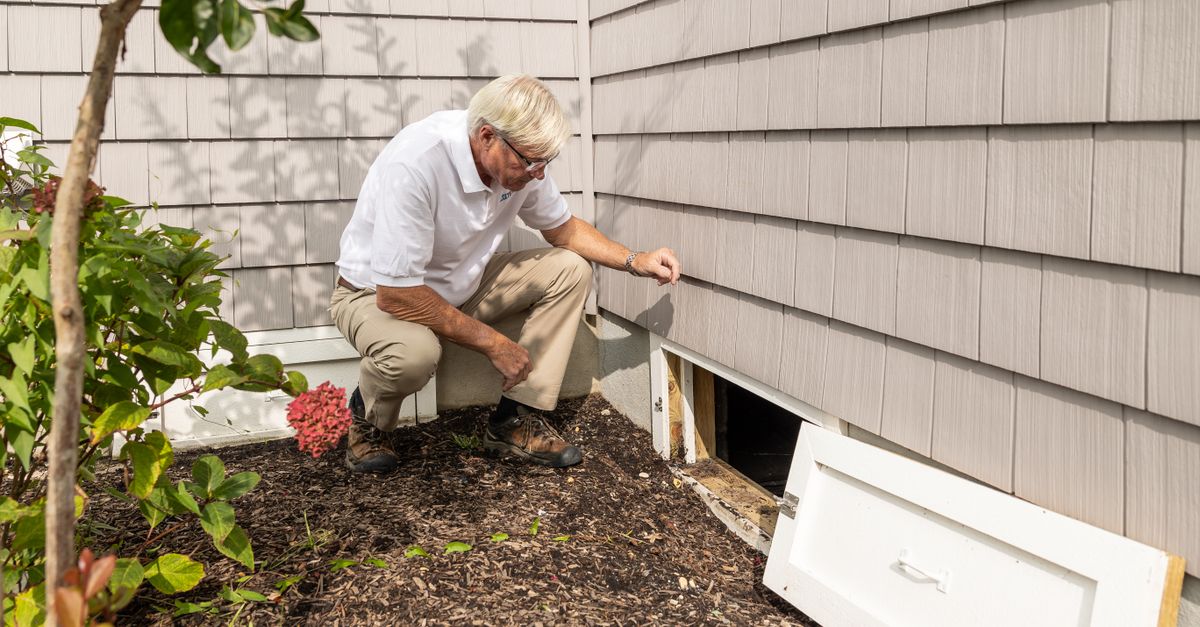
Whether you choose replacement cost or actual cash value, your homeowners policy excludes the same perils and conditions:
- Flood and earthquake require separate policies. Neither RC nor ACV covers these under a standard homeowners form.
- Wear and tear, deferred maintenance. If your 20-year-old roof fails because it was never maintained, the insurer may deny the claim entirely — regardless of whether you have RC or ACV. This is a coverage exclusion, not a depreciation issue.
- Cosmetic damage. Paint fading, minor scratches, and purely aesthetic wear aren’t covered.
For a full breakdown of what standard policies exclude, see What Does Homeowners Insurance Not Cover? Exclusions Explained.
How to decide which coverage you need
Choose replacement cost coverage if:
- Your home is less than 15 years old.
- You live in a high-cost construction market (California, Northeast, major metro areas).
- You don’t have $5,000+ in savings available for a surprise repair gap.
- This is your primary residence and you need predictable claim outcomes.
Choose actual cash value coverage if:
- Your home is 20+ years old and many components are near end-of-life anyway.
- This is a rental property or vacation home where you’re managing to a budget.
- You have significant savings and prefer to self-insure the depreciation gap in exchange for lower premiums.
- You’re comfortable taking on more financial risk at claim time to save money now.
If you’re unsure: Run the math. Estimate your RC premium increase (ask your insurer or agent for a quote), multiply by the years you’ll own the home, and compare that to the potential depreciation gap on your roof, HVAC, and flooring. If one major claim would cost more out-of-pocket under ACV than you’d save in premiums over a decade, replacement cost is the safer choice.
FAQ
Can I switch from ACV to replacement cost mid-policy?
Most insurers allow the change only at renewal, not mid-term. Some will let you add an RC endorsement for specific high-value items (like a new roof) if you request it, but switching the entire dwelling coverage usually requires waiting for your policy anniversary. Contact your agent as soon as you’re considering the change.
What if my home has both old and new components?
Depreciation is calculated per component, not for the home as a whole. If you replaced your roof two years ago but your HVAC is 18 years old, a roof claim under ACV would see minimal depreciation while an HVAC claim would be heavily depreciated. Replacement cost coverage treats both as new regardless of age.
Does replacement cost cover building code upgrades?
Not automatically. If your local building code has changed since your home was built, bringing repairs “up to code” may cost more than a like-for-like replacement. Some policies offer an “ordinance or law” endorsement to cover this gap; others cap it at a percentage of your dwelling limit. This is separate from the RC vs ACV question — check your policy’s endorsements either way.
The right coverage depends on your home’s age, your savings, and your tolerance for surprise expenses. Replacement cost coverage eliminates the depreciation guessing game but costs more every year. Actual cash value coverage saves money now but may leave you thousands of dollars short when you file a claim.
Most homeowners with newer homes and limited savings choose replacement cost. If your home is older or this is an investment property, actual cash value may be the pragmatic choice — as long as you’re prepared to cover the gap.
Not insurance or financial advice. Coverage terms, exclusions, and pricing vary by state and insurer. Consult your policy documents and a licensed agent for guidance specific to your situation.