
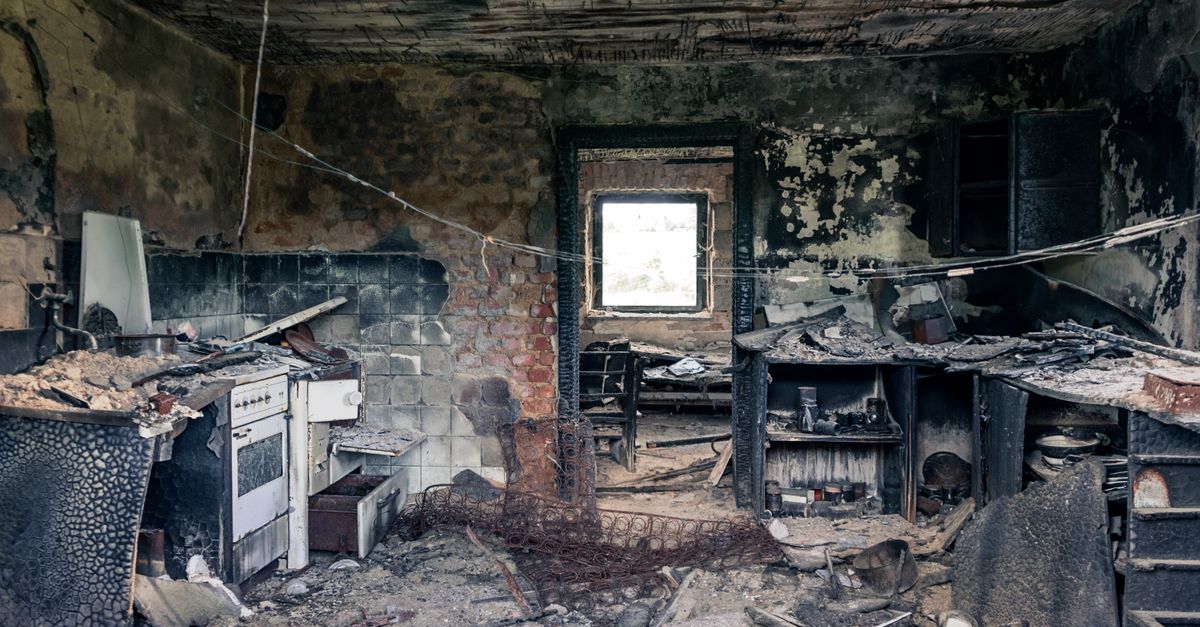
Your homeowners insurance premium difference between replacement cost and actual cash value coverage is typically $100–$150 per year for a $400,000 home. The claim payout difference when your house burns down? $80,000 or more. That gap is why replacement cost is the standard on most U.S. policies—and why actual cash value can leave you unable to rebuild.
The short answer
Replacement cost value (RCV) pays to rebuild or replace damaged property at current market prices, with no deduction for age or wear. Actual cash value (ACV) pays replacement cost minus depreciation—the item’s current secondhand value, not what it costs to rebuild. RCV premiums run 10–30% higher than ACV, but ACV payouts on older homes can fall 40–60% short of true rebuilding costs.
How replacement cost coverage works
Replacement cost homeowners insurance reimburses you for the full cost to repair or rebuild damaged property at today’s construction prices. If a fire destroys your kitchen and a contractor quotes $45,000 to rebuild it, your insurer pays $45,000 (minus your deductible)—even if that kitchen was built 15 years ago and the original cost was $30,000.
The coverage applies up to your dwelling limit. If your policy lists “$400,000 dwelling coverage,” that’s your maximum payout for structural damage, regardless of how much rebuilding actually costs. If construction inflation has pushed rebuild costs above your limit, you’re underinsured—RCV doesn’t fix that problem; it just pays the full policy limit without depreciation.
RCV is the standard on dwelling coverage (the house structure itself) in most U.S. states. Personal property—furniture, electronics, clothing—often defaults to ACV unless you buy a separate endorsement.
Source: NAIC Homeowners Insurance Shopper’s Guide
How actual cash value coverage works
Actual cash value coverage pays replacement cost minus depreciation. The depreciation schedule varies by insurer and item type, but a common formula deducts 1–3% of an item’s value per year of use. A 20-year-old roof with a $15,000 replacement cost might be valued at $6,000–$9,000 ACV, depending on how aggressively your carrier depreciates roofing materials.
Here’s a concrete example: your 15-year-old roof needs replacement after storm damage. The contractor’s bid is $18,000. Under RCV, you’d receive $18,000 (minus deductible). Under ACV, the insurer applies 40–50% depreciation—the roof is past half its expected lifespan—and pays $9,000–$12,000. You cover the $6,000–$9,000 gap out of pocket or delay the repair.
Depreciation schedules aren’t standardized. One insurer might depreciate a roof at 2% per year; another uses 3% or applies accelerated depreciation after year 10. The schedule lives in policy fine print, and most homeowners don’t see the impact until they file a claim.
ACV coverage is less common on dwelling coverage in most states but widely used on personal property when RCV endorsements aren’t purchased. It’s also the default on some older policies, particularly in high-risk coastal states where insurers limit exposure.
Source: Insurance Information Institute — How Homeowners Insurance Works
What RCV costs vs ACV: the real premium difference

Replacement cost coverage costs 10–30% more in annual premiums than actual cash value for the same dwelling, according to Insurance Information Institute and state insurance department filings. For a $400,000 home in a moderate-risk area, that translates to roughly $100–$150 per year in additional premium.
The gap widens for older homes and personal property endorsements. A 30-year-old house may see a 25–30% RCV premium increase because the depreciation risk (what ACV would save the insurer on a claim) is larger. Personal property RCV endorsements can add 30–50% to that portion of your premium.
Over 10 years, you’d pay $1,000–$2,000 more in total premiums for RCV on a typical dwelling. In exchange, you avoid a potential $80,000+ shortfall if the house is destroyed—depreciation on a 20-year-old home can easily hit 40–50% in an ACV payout.
Here’s the math on a total-loss scenario:
| Coverage Type | Rebuild Cost | Payout After Depreciation | 10-Year Premium Total | Homeowner Gap |
|---|---|---|---|---|
| ACV | $400,000 | $240,000–$280,000 (40% depreciation) | $8,500–$9,200 | $120,000–$160,000 |
| RCV | $400,000 | $400,000 | $9,500–$10,500 | $0 |
| Cost difference | — | — | $1,000–$2,000 | $120,000–$160,000 gap with ACV |
The trade-off: pay $100 extra per year now or absorb a six-figure gap later. For most primary residences, that’s not a close call.
How depreciation eats your claim payout
Depreciation is applied item by item, and the schedules vary widely. Roofing materials, HVAC systems, and appliances depreciate faster than structural framing. Here’s how it plays out across common claims:
Roof replacement (partial loss)
- Replacement cost: $18,000
- Roof age: 15 years (typical 25-year lifespan)
- RCV payout: $18,000 (minus deductible)
- ACV payout: $9,000–$12,000 (40–50% depreciation applied)
- Homeowner gap: $6,000–$9,000
HVAC system failure
- Replacement cost: $8,000
- System age: 12 years (typical 15-year lifespan)
- RCV payout: $8,000
- ACV payout: $4,800–$5,600 (30–40% depreciation)
- Homeowner gap: $2,400–$3,200
Total loss (house fire)
- Rebuild cost: $400,000
- Home age: 20 years
- RCV payout: $400,000 (up to policy limit)
- ACV payout: $240,000–$280,000 (40% average depreciation on structure and systems)
- Homeowner gap: $120,000–$160,000
The older your home, the wider the gap. A 30-year-old house can see 50–60% depreciation on major systems, leaving you with less than half the money needed to rebuild at current market rates.
Depreciation examples based on standard industry schedules and American Society of Appraisers valuation standards.
Who should buy replacement cost—and who can skip it

Buy RCV if:
- You own a primary residence. The risk of a $100,000+ shortfall after a total loss far outweighs the $100–$150/year premium increase. You need to be able to rebuild, not just collect a depreciated check.
- Your home is older than 10 years. Depreciation accelerates with age. A 20-year-old home under ACV might pay out 40–60% less than rebuild costs.
- You have a mortgage. Most lenders require RCV on the dwelling as a condition of the loan—ACV won’t meet that requirement.
- You can’t self-fund the gap. If a $50,000–$150,000 shortfall would prevent you from rebuilding, RCV is necessary.
ACV might make sense if:
- You own a secondary property you plan to sell soon. A vacation cottage or rental property you’re liquidating doesn’t need full rebuilding coverage—depreciated market value may be acceptable.
- The structure has low value. A detached garage or shed worth $15,000 might not justify the RCV premium increase; you could self-insure the depreciation.
- You’re combining ACV with a very high deductible. If your deductible is $10,000 and your typical claims are under $20,000, the RCV benefit shrinks—you’re already absorbing much of the loss.
For most homeowners, RCV on the dwelling is non-negotiable. The premium difference is a rounding error compared to the claim shortfall risk.
State and insurer variation you need to know
Replacement cost availability and pricing vary significantly:
- Florida, Louisiana, and coastal states: Some insurers limit RCV on wind/hail damage or require higher deductibles. After major hurricanes, carriers have restricted coverage or exited these markets entirely. Always confirm RCV applies to your primary risk (windstorm, theft, fire, etc.).
- Texas and California: No state mandate; RCV/ACV terms are set by individual insurers. Shop carefully and compare policy language, not just premiums.
- New York and Massachusetts: Regulated states where RCV premiums are filed and approved by state regulators. Pricing is more transparent, but availability depends on carrier appetite.
Some insurers also offer “functional replacement cost,” which pays to rebuild with materials of similar quality—not necessarily identical. If your 1920s home has plaster walls, the insurer might pay for drywall instead. Read the policy definitions carefully.
State variation based on NAIC consumer alerts and state insurance department filings.
What replacement cost doesn’t cover
RCV is not a blank check. You’re still subject to:
- Policy limits. If your dwelling limit is $300,000 and rebuild costs $400,000, you’re underinsured by $100,000—even with RCV.
- Covered perils only. RCV applies to fire, theft, windstorm, and other named perils in your policy. Floods and earthquakes require separate policies. (See Flood Insurance: How It Works and What You’ll Actually Pay for flood coverage details.)
- Maintenance exclusions. Damage from deferred maintenance—a roof collapse due to age and neglect—may not trigger RCV. Insurers expect you to maintain the property.
- Personal property defaults to ACV. Unless you buy a separate RCV endorsement for contents, your furniture and electronics are depreciated at claim time.
If you’re insuring a rental property, note that Landlord Insurance vs. Homeowners Insurance: Key Differences policies often default to ACV and have different coverage rules.
FAQ
What does replacement cost mean in homeowners insurance?
Replacement cost pays the full amount to rebuild or replace damaged property at current market prices, with no deduction for age or wear. You get what it costs to fix it today, not what it was worth secondhand.
What is actual cash value homeowners insurance?
Actual cash value pays replacement cost minus depreciation—essentially the item’s current used-market value. A 15-year-old roof gets a 15-year-old roof’s depreciated payout, not a new roof’s cost.
Which is cheaper—replacement cost or actual cash value?
ACV premiums are typically 10–30% lower than RCV for the same coverage. For a $400,000 dwelling, that’s $100–$150 per year in savings. But the claim payout can be 40–60% smaller, leaving a five- or six-figure gap.
Should I choose replacement cost or actual cash value?
For a primary residence, choose RCV. The premium increase is small compared to the rebuilding shortfall risk with ACV. ACV makes sense only for secondary properties you plan to sell, low-value structures, or items you self-insure.
What is the difference between RCV and ACV in homeowners insurance?
RCV reimburses the full rebuild cost at today’s prices. ACV reimburses rebuild cost minus depreciation (age, wear, and tear). The difference is largest on older homes and structures—often tens of thousands of dollars on a major claim.
Replacement cost coverage costs more, but it’s the only way most homeowners can actually rebuild after a loss. The $100–$150 annual premium increase buys protection against a $100,000+ shortfall when depreciation is applied. For a primary residence, that trade-off is straightforward.
This is not insurance or financial advice. Coverage, pricing, and rules vary by state and insurer. Always get written quotes and clarify RCV/ACV terms in your policy documents before purchasing.