

You have less time than you think to report an accident—and the process takes longer than most articles admit. In Texas, your insurer must respond within 15 calendar days. In California, they have five business days to assign an adjuster. Miss your state’s notification window or file incomplete documentation, and you risk a denial or months-long delay.
This guide walks you through how to file an auto insurance claim correctly, what timeline to expect for your claim type and state, and the coverage gaps and delays that trip up most first-time filers.
What you’ll need
Documentation (gather immediately after accident):
- Other driver’s name, phone, insurance company, and policy number
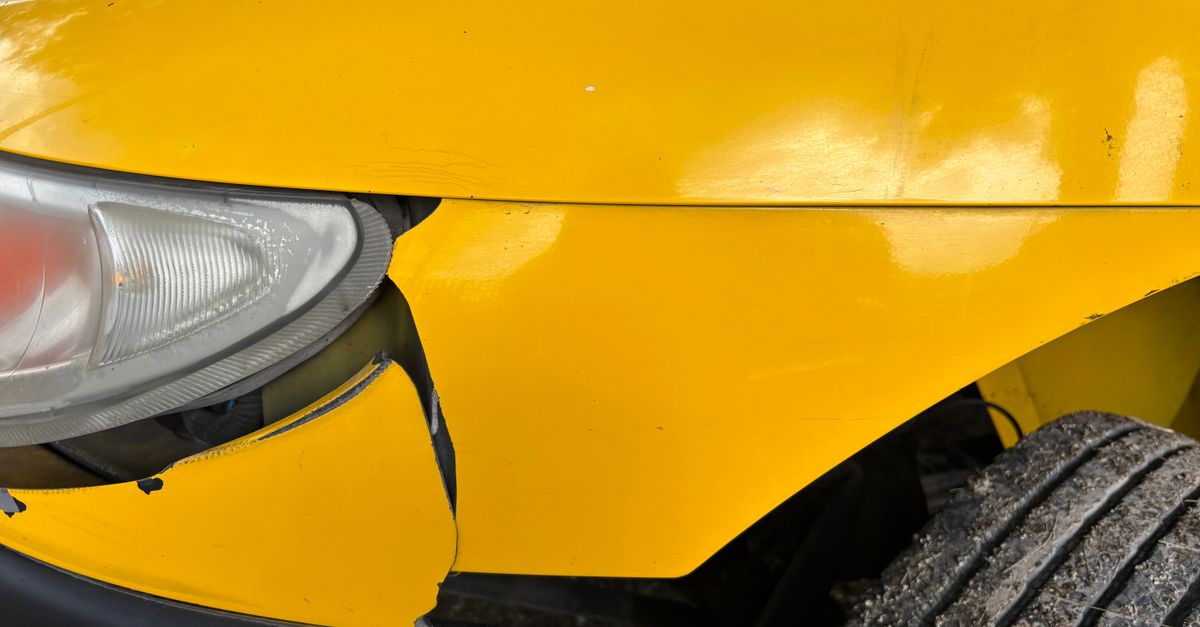
- Photos of all vehicle damage (yours and theirs), license plates, accident scene, road conditions
- Police report number (if police responded)
- Witness names and contact information
- Date, time, and exact location of accident
From your policy:
- Your policy number and declarations page
- Your deductible amount (typically $250–$1,000)
- Coverage type: liability-only, collision, comprehensive, or full coverage
For injury claims (if applicable):
- Medical records and bills
- Proof of lost wages (if you missed work)
Filing access:
- Insurer’s claims phone number or online portal
- Your insurer’s mobile app (most major carriers now offer in-app filing)
Before you start
Report to police first if:
- Anyone is injured (required in most states)
- Property damage exceeds your state’s threshold (typically $500–$1,500)
- The other driver is uninsured, leaves the scene, or appears impaired
Check your state’s notification deadline. Most states require you to notify your insurer “as soon as practicable”—usually within 30–60 days. Late notice may delay or limit coverage; check your policy for specific timing requirements and your state’s rules.
Know which coverage applies:
- Collision: Covers your vehicle damage when you hit another car or object
- Comprehensive: Covers non-collision damage (theft, vandalism, weather, hitting an animal)
- Liability: Covers damage you cause to others (doesn’t pay for your own vehicle)
- PIP/medical payments: Covers your injuries regardless of fault (required in no-fault states)
If you only carry liability insurance, your insurer won’t pay for damage to your vehicle—you’ll file with the at-fault driver’s insurer instead. See Collision vs Comprehensive Insurance: Which Do You Need? for coverage breakdowns.
Step 1: Report the accident to your insurer
Call your insurer’s claims line or file online within 24–72 hours of the accident. Don’t wait for the other driver’s insurer to contact you—even if they’re clearly at fault, you may need to file with your own insurer first (especially in no-fault states).
What you’ll provide:
- Accident date, time, and location
- Description of what happened (stick to facts; don’t admit fault)
- Other driver’s insurance information
- Police report number (if available)
- Photos and witness contact information
You’ll receive a claim number. Write it down—you’ll need it for all future communication.
Online vs. phone filing: Both work. Online filing (via insurer website or app) creates an automatic timestamped record. Phone filing connects you to a live adjuster who can answer immediate questions. Choose based on your comfort level and urgency.
Step 2: Insurer assigns an adjuster and acknowledges your claim
Timeline: 1–5 business days in most states. State law sets the deadline:
- Texas: 1 business day to acknowledge; 15 calendar days to accept or deny (Texas Insurance Code § 2701.004)
- California: 5 business days to assign adjuster or request additional information (CA Insurance Code § 2702)
- New York: Most insurers acknowledge claims within 15 business days (check your policy for specific deadlines)
Your adjuster is the insurance employee who investigates your claim, inspects damage, and approves or denies your payout. You’ll receive their name and contact information.
What the adjuster does:
- Reviews your documentation
- Contacts witnesses and the other driver’s insurer
- Schedules a vehicle inspection (in-person or via photos)
- Determines fault and coverage
If the adjuster requests additional documents, respond immediately—every delay extends your timeline.
Step 3: Vehicle inspection and damage estimate
The adjuster will either:
- Inspect in person at a body shop, claims center, or your home
- Request detailed photos if damage is minor or you’re in a remote area
Timeline: 5–30 days after initial filing for property-damage-only claims. Add 30–60 days if injury or disputed liability is involved.
The adjuster produces a damage estimate. You can also get an independent estimate from a body shop. If the two estimates differ significantly, the insurer may send a second appraiser or you can request one.
For total loss claims (vehicle is “totaled”), the insurer determines your car’s actual cash value (ACV)—not what you paid or what you owe on a loan. If ACV is less than your loan balance, you’ll owe the difference unless you carry gap insurance.
Step 4: Insurer approves, denies, or requests more information

Timeline: 15–60 days after completed documentation for straightforward claims. Complex or disputed claims can take 90–180+ days.
Possible outcomes:
- Approved: You receive a settlement offer (see Step 5)
- Denied: Insurer explains why coverage doesn’t apply (see “Why claims get delayed or denied” below)
- Partially approved: Insurer disputes some costs or assigns you partial fault
- On hold: Investigation continues (fraud check, disputed liability, or missing information)
If denied or disputed, you can:
- Provide additional evidence
- Request a supervisor review
- File a complaint with your state insurance commissioner
- Hire a public adjuster or attorney for large claims
Step 5: Settlement payment
Once approved, the insurer issues payment:
- Direct to body shop if you’ve already chosen one and they bill the insurer directly
- Check to you (minus your deductible) if you’re handling repairs yourself
- For total loss: Check for ACV minus deductible, plus any sales tax reimbursement per state law
Deductible is subtracted from every payout. Example:
- Damage: $5,000
- Deductible: $1,000
- You receive: $4,000
If damage is less than your deductible, the insurer pays nothing and you pay all repair costs. Filing isn’t worth it unless damage clearly exceeds your deductible.
How long the full process takes: realistic timelines
| Claim Type | Typical Timeline | What Delays It |
|---|---|---|
| Minor property damage, clear fault | 15–30 days | Missing photos, slow adjuster scheduling |
| Moderate damage, no injuries | 30–45 days | Multiple estimates, parts availability |
| Total loss (vehicle totaled) | 30–60 days | ACV negotiation, lien payoff coordination |
| Injury claim (medical bills under $10K) | 60–120 days | Medical record requests, treatment completion |
| Disputed liability | 60–180+ days | Witness interviews, competing evidence, coverage disputes |
| Suspected fraud or misrepresentation | Indefinite hold | Investigation, potential denial or legal action |
The “15–30 days” claim you see in most articles applies only to simple property-damage claims with clear liability. Injury claims, total loss claims, and anything involving disputed fault routinely take two to six months.
According to the Insurance Information Institute, the most common delay is incomplete initial documentation—photos missing, witness statements not collected, or medical records not requested promptly.
Why claims get delayed or denied
Common delay triggers:
- Incomplete documentation — Adjuster requests photos, repair estimates, or witness statements you didn’t provide initially. Every request-and-response cycle adds 5–10 days.
- High-volume periods — After hurricanes, hailstorms, or major weather events, adjusters are backlogged. Expect 2–4 week delays.
- Coverage disputes — Insurer questions whether the accident is covered (e.g., you were using your car for rideshare but policy excludes commercial use).
- Fraud investigation — Any red flag (inconsistent statements, suspicious damage patterns, prior claims history) triggers a hold while the insurer investigates.
Common denial reasons:
- Policy lapsed — Premium wasn’t paid when accident occurred
- Excluded driver — Someone not listed on your policy was driving
- Excluded activity — Racing, commercial use, or intentional damage
- Misrepresentation — You lied on your application about drivers, vehicle use, or claims history; insurer can void the policy entirely
- Wear and tear vs. collision — Mechanical failure or pre-existing damage isn’t covered under collision or comprehensive
If your claim is denied and you believe it’s wrongful, file a complaint with your state’s Department of Insurance. Insurers who engage in bad-faith claims practices (unreasonable delays, refusal to investigate, ignoring evidence) can face penalties and owe you damages beyond your claim value. The FTC warns consumers to document every delay and denial reason in writing.
At-fault vs. not-at-fault: how it affects your claim
At-fault states (42 states):
- The at-fault driver’s insurer pays the other driver’s damages
- If you’re at-fault, expect a rate increase of 15–40% on your next renewal, lasting 3–7 years (unless you have accident forgiveness)
- You file with your own insurer for your vehicle damage (collision coverage); they may subrogate (recover costs) from the at-fault driver’s insurer
No-fault states (12 states + DC): Florida, Hawaii, Kansas, Kentucky, Massachusetts, Michigan, Minnesota, New Jersey, New York, North Dakota, Pennsylvania, Utah, and DC require Personal Injury Protection (PIP). Each driver files with their own insurer for injury costs regardless of who caused the accident. Property damage is still determined by fault. Coverage rules and requirements vary by state.
Comparative negligence: If you’re partially at fault (e.g., 30%), some states reduce your payout by your fault percentage. If you’re over 50% at fault in some states, you recover nothing. Rules vary; check your state’s fault threshold.
Verify your claim is complete
Before assuming your claim is done:
- Confirm the settlement amount in writing
- Check that the payment matches the approved estimate minus deductible
- If paying a body shop directly, verify they received full payment
- For injury claims, confirm all medical bills are covered or document any you’re paying out-of-pocket
Keep all documentation for at least three years—state insurance commissioners often require claims history when investigating complaints.
What happens to your rates after a claim
At-fault claims typically raise your premium 15–40% at renewal, depending on:
- Claim severity (minor fender-bender vs. total loss)
- Your prior claims history (first claim in 5 years vs. third claim in 2 years)
- State regulations (some states limit rate increases after not-at-fault claims; policies vary)
Not-at-fault claims usually don’t raise rates, but some insurers increase them slightly (5–10%) because you’re now statistically more likely to file again.
Accident forgiveness prevents the rate increase for your first at-fault claim if you’ve been claim-free for 3+ years. It’s included free by some major insurers or available as a paid endorsement ($50–$150/year). Availability varies by state and insurer.
See How Your Claims History Affects Car Insurance Rates for long-term rate impact.
When you need outside help
Consider a public adjuster (costs 5–15% of settlement) if:
- Your claim is denied and you believe it’s wrongful
- The settlement offer is far below your independent repair estimate
- The claim is over $10,000 and you’re uncomfortable negotiating
Hire an attorney if:
- Injuries are severe or long-term
- The insurer is acting in bad faith (unreasonable delays, ignoring evidence, refusing to investigate)
- You’re being sued by the other driver for damages exceeding your liability limits
File a complaint with your state Department of Insurance if:
- The insurer misses state-mandated response deadlines
- You suspect bad faith or unfair claims practices
- The claim has been pending over 90 days with no explanation
Filing a car insurance claim isn’t as simple as “call your insurer and wait 15 days.” Your timeline depends on your state’s regulations, the claim’s complexity, and how thoroughly you document the accident upfront. Expect delays if liability is disputed, if you’re filing an injury claim, or if documentation is incomplete. Know your deductible before filing—if damage is less than your deductible, you pay out of pocket and filing isn’t worth the potential rate increase.
For coverage questions before you file, see How Much Car Insurance Do I Really Need? A Buyer’s Guide and Auto Insurance Coverage Limits Explained: What They Mean & How to Choose.
Not insurance or financial advice. Coverage terms, timelines, and state laws vary by location and insurer. Check your policy or contact your insurer for details specific to your situation.